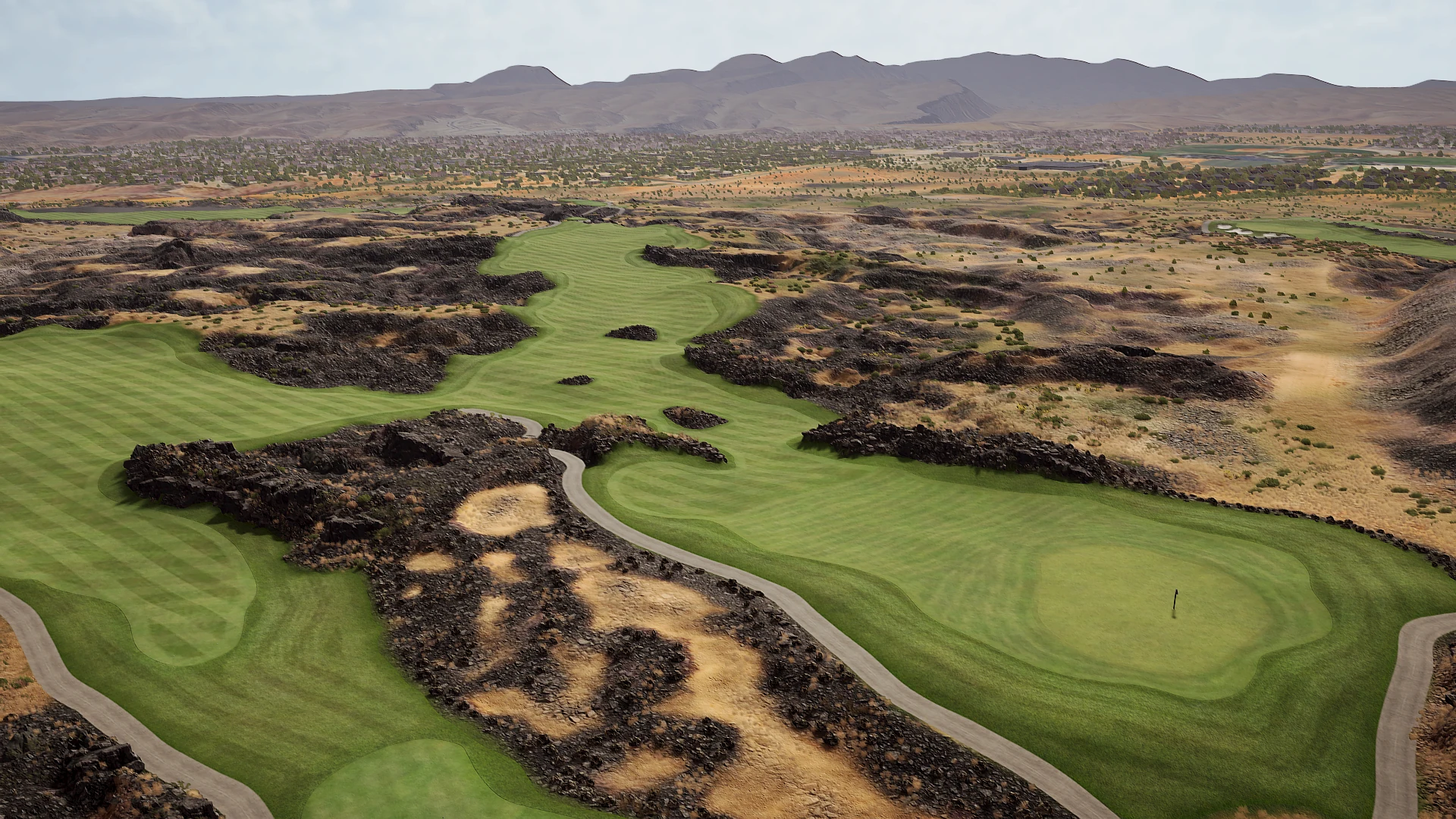
Lead image: Evian Resort Golf Club – Champions Course depicted in Trackman Virtual Golf. Courtesy of the authorized Trackman Media Kit. Confirm specific course availability with Birdies.
Ask a golfer how far their 7-iron goes. There is a decent chance you will hear about the best 7-iron they ever hit.
That flushed one. The one with the perfect flight. The one that has quietly become the number they use for every approach since. The trouble starts when the flag is at that number and the swing is an ordinary Tuesday swing.
A club-gapping session gives you something more useful: a picture of your usual distances, the space between your clubs and where your misses gather. At Birdies in West Sacramento, indoor golf can be a night out—and a reason to get better acquainted with the clubs you already own.
How many shots does Trackman need to map a club?
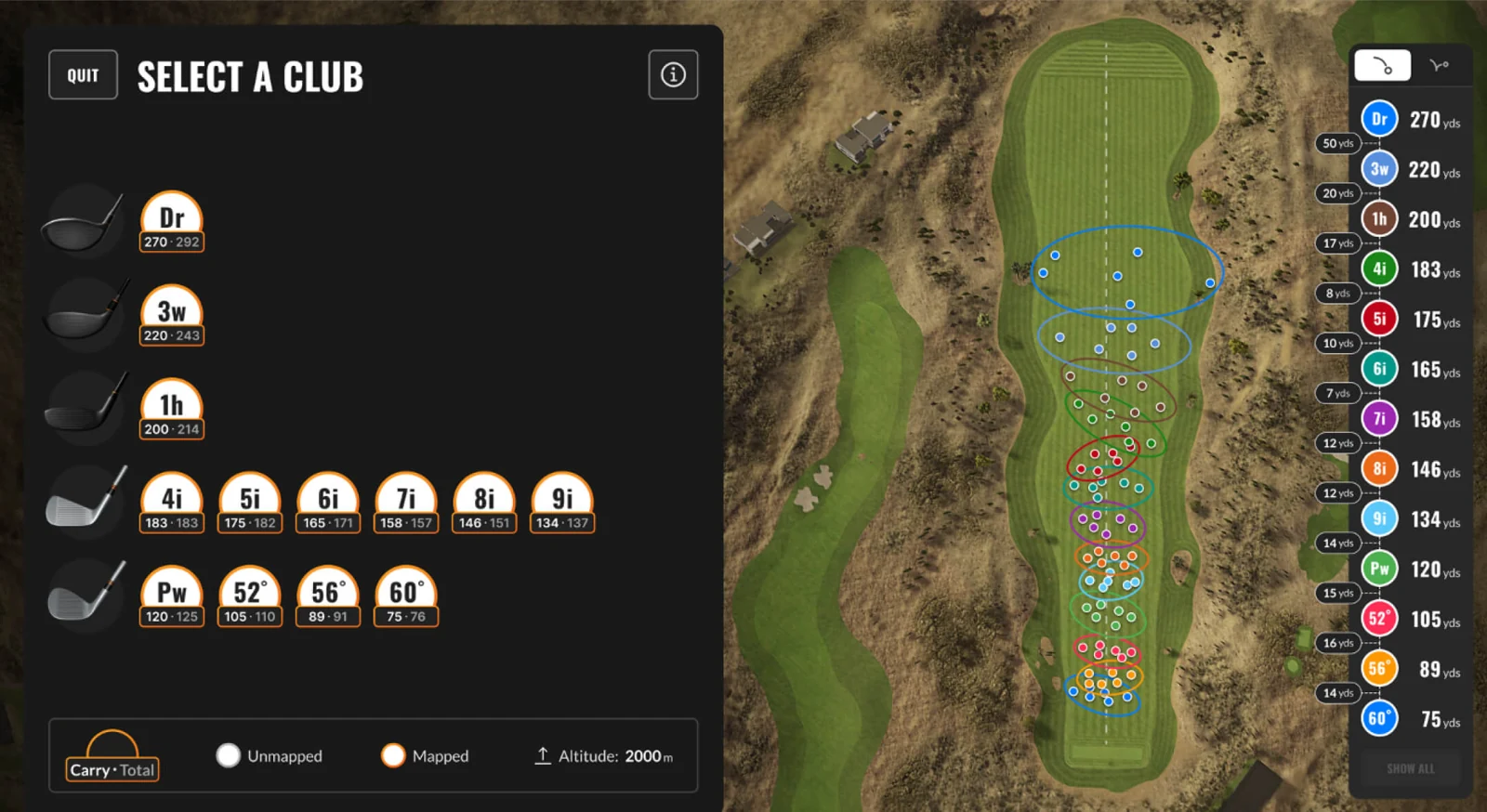
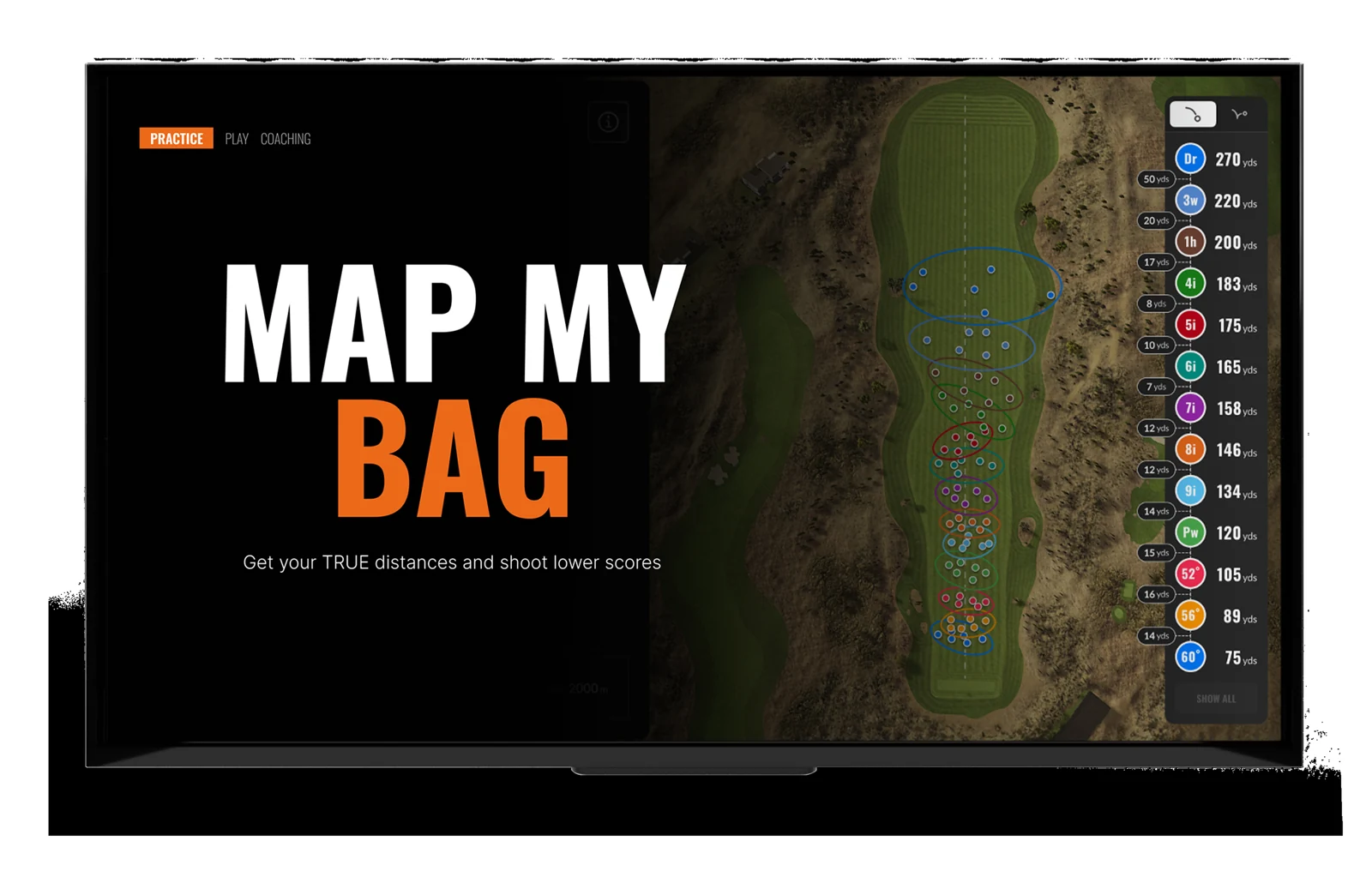
Trackman’s Map My Bag guide sets a six-shot minimum for a club and recommends 30 for the most accurate result within the feature. Its launch guide describes recording up to 30 shots per club. Those are software instructions, not a promise that any particular sample perfectly describes your game.
Even that small starting set changes the conversation. Instead of remembering the longest flight, you have several attempts to consider. Did they finish near one another? Did two clubs reach almost the same place? Did your comfortable swing perform differently from the swing you were trying to impress yourself with? Read Trackman’s current setup guide.

Compare carry distance, total distance and club gaps
Imagine two neighboring clubs carrying 142 and 145 yards, while the next reaches 164. That would leave a three-yard difference followed by a 19-yard gap. This is a hypothetical example, but it shows why a tidy sequence of club numbers does not necessarily mean tidy coverage.
A map can help you notice an overlap before you discover it over water. It can also give you a more useful question for your coach or fitter: “Here is the gap I measured. What should I investigate?” Buying another club is one possible decision, not the automatic conclusion.
Read your shot dispersion, not just your longest shot
Trackman documents carry, total distance, dispersion and gapping in Map My Bag. Carry tells you how far the ball travels before landing; total includes the modeled finish after landing. Dispersion shows the spread of shots.
For an approach that must clear something, the landing distance deserves attention. For a layup, where the ball finishes may matter more. And when a shot can miss either side, a single average distance is only part of the decision.
How to plan a focused club-gapping session
- Pick a question. Start with the clubs you struggle to choose between.
- Set up your profile. Trackman’s current TPS 10.3 guidance requires at least eight clubs configured in your app bag to access the mode. That does not mean you must measure all eight in one visit.
- Warm up first. Then collect shots with a normal, repeatable intention.
- Check the conditions. Keep units and settings consistent when comparing sessions.
- Leave with one useful observation. An overlap, a gap or a recurring miss is a better takeaway than another longest-shot story.
You do not have to turn the visit into an exhausting full-bag audit. Begin with a manageable question, allow time to get comfortable and ask our team about the current setup. A focused visit is easier to repeat than an ambitious plan you never finish.
Birdies bay prices for a shared practice session
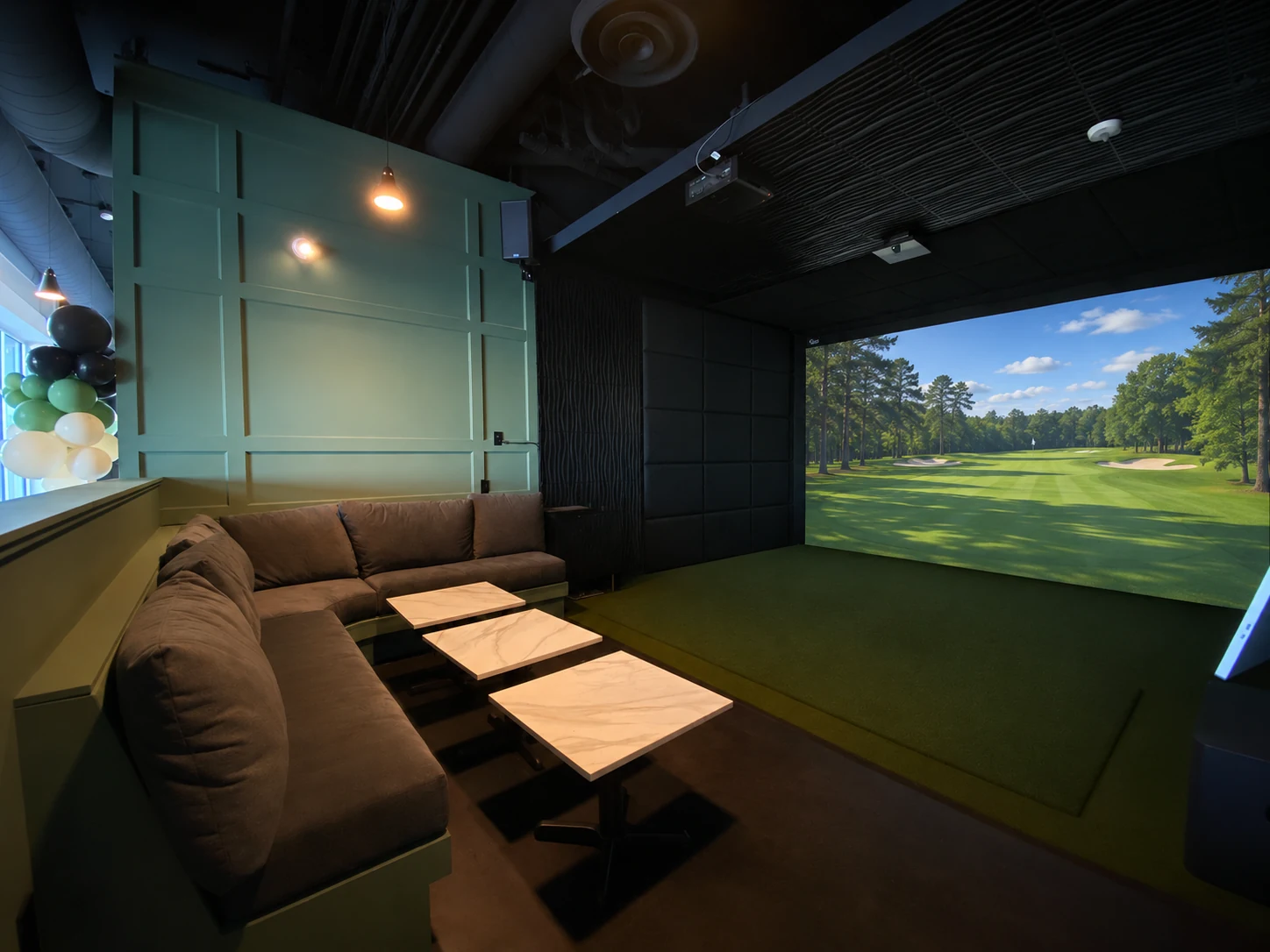
Standard bays at Birdies are $60 per hour for up to eight people; VIP bays are $80 per hour for up to 14. Golf is priced per bay. Two people sharing a standard bay for an hour split that golf charge into $30 each, before food, drinks and any other applicable charges.
Sharing the booking does not mean comparing your carry number with your friend’s. Different golfers have different patterns. The useful comparison is between what you thought your clubs did and what you observed that day.
Before you book
- Bring your own clubs, charged phone and Trackman app login.
- Ask Birdies to confirm Map My Bag availability and current setup requirements.
- Plan time for warming up and interpreting the result, not just hitting balls.
New to the bays? Start with our first-visit guide. Curious about the measurement? Read how Trackman turns your shot into the shot on screen.
Sources & further reading
Technical details checked November 5, 2026. Software features depend on the installed version and setup. TRACKMAN® and the Tracer Logo are registered trademarks of Trackman A/S.
Birdies bay photography includes a digital golf-screen edit; the venue layout is retained.