The short version
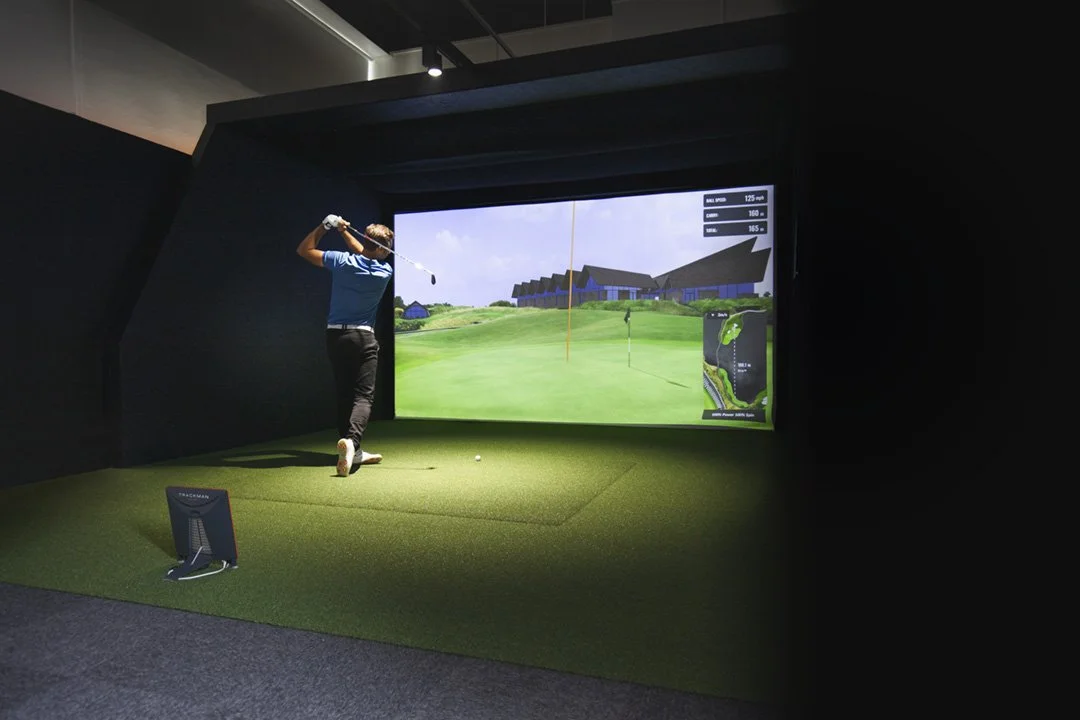
- You strike a real golf ball.
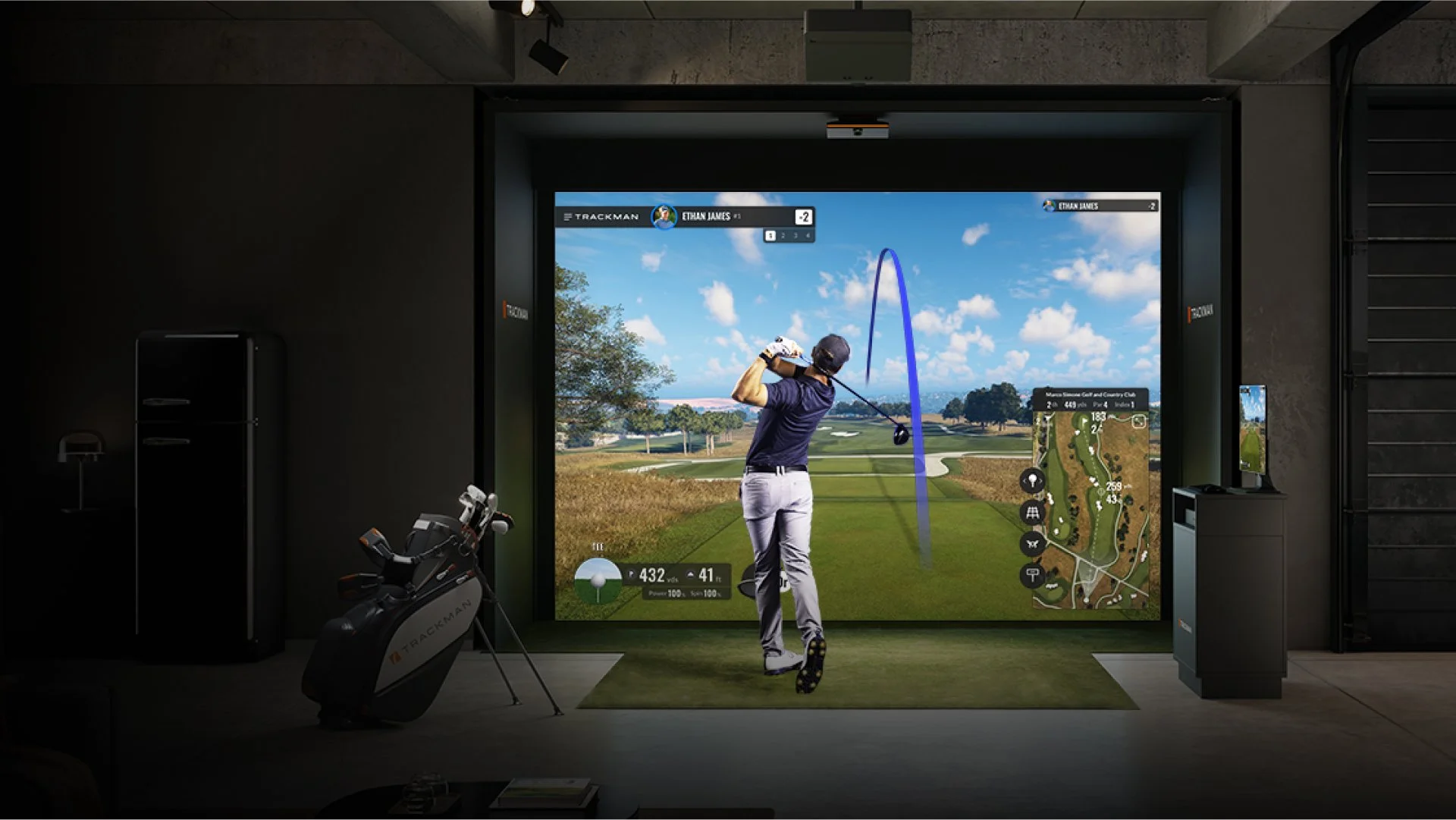
- Trackman iO captures launch information.
- Software models the flight.
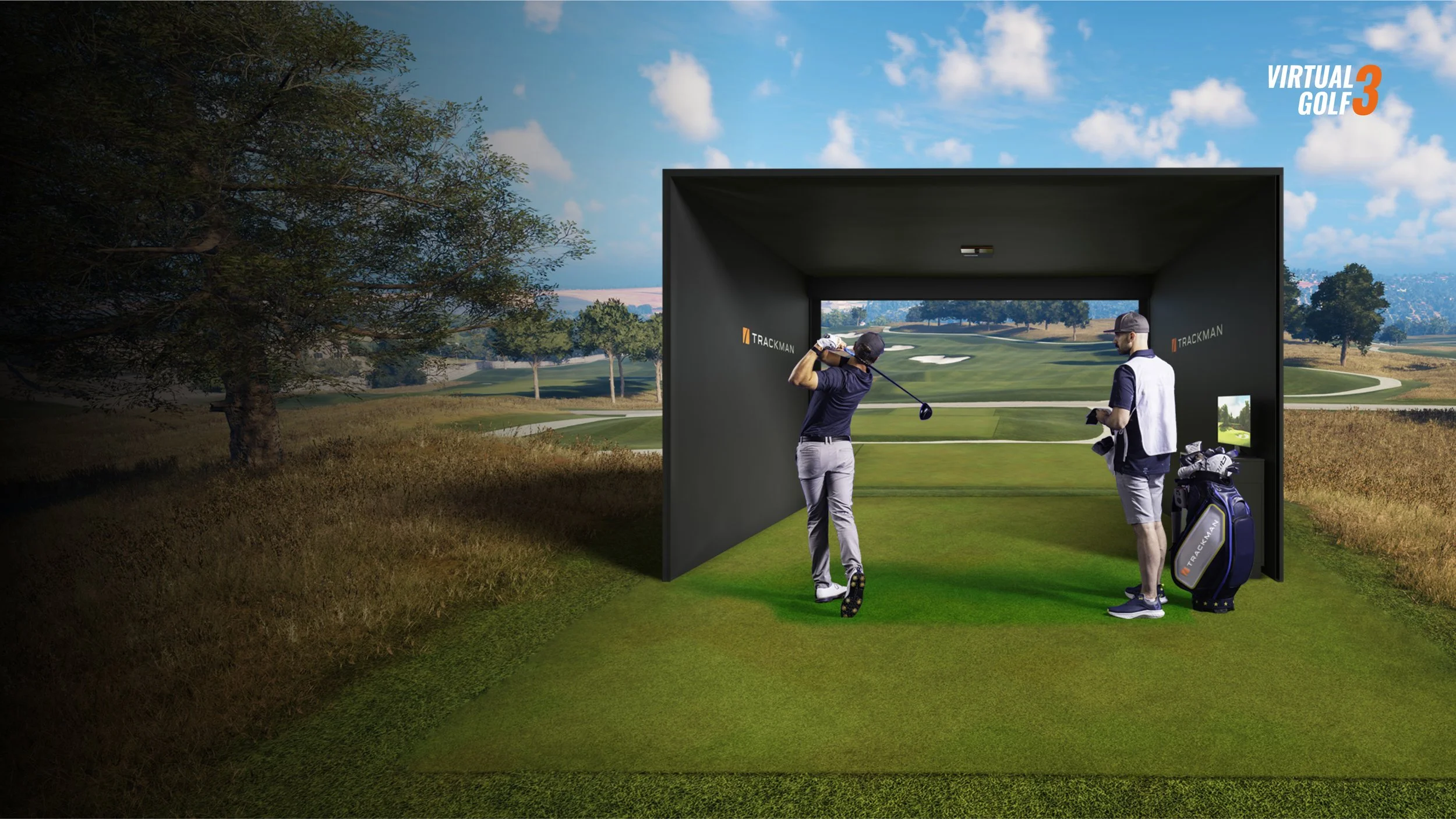
- The screen shows the result in a virtual course.
You hit a ball into the screen. A moment later, you are watching it fly down a fairway. The interesting part is what happens in between: a launch monitor observes the shot, software calculates its flight, and the simulator displays the result in a virtual environment.
At Birdies Social Club in West Sacramento, that process starts with Trackman iO. Understanding the difference between the measured shot and the simulated flight makes indoor golf much easier to understand.
First, you hit a real golf shot
The club, ball and impact are real. You are not pressing a button to choose how far a digital ball travels. Your strike produces the initial conditions that the system needs to represent the shot: how fast the ball leaves, the direction it starts and how it spins.
Trackman iO captures information near impact
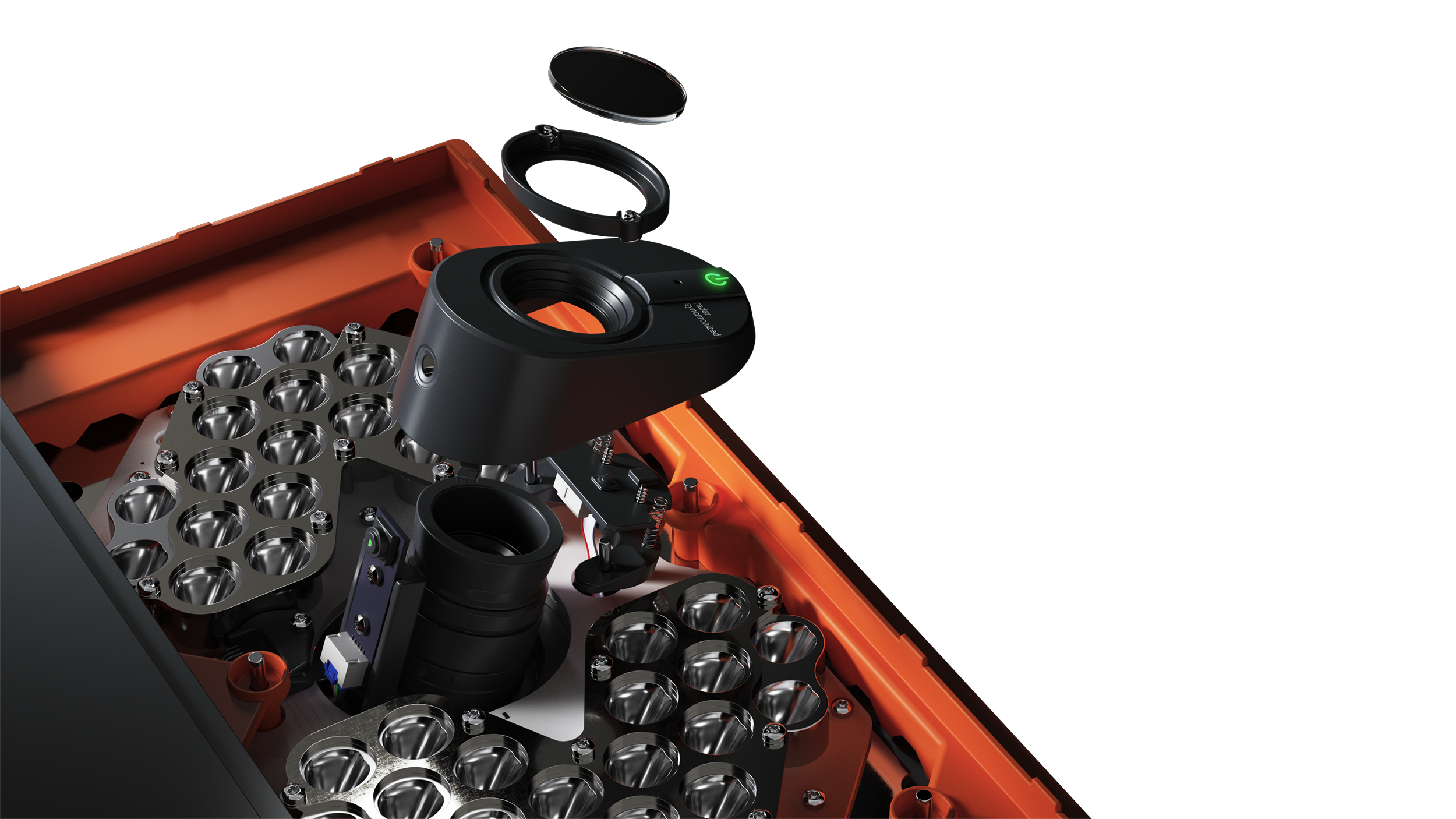
Trackman describes iO as an indoor system that combines radar, infrared and high-speed imaging. Its ceiling-mounted sensors gather ball and club information, including measured three-dimensional spin and spin axis. These technologies work together to capture the launch rather than watching a ball fly hundreds of yards indoors.
The distinction matters: the monitor measures information about the real shot in the bay. It does not physically observe the entire outdoor flight you then see on screen.
The important distinction: the sensors capture the real shot near launch. The long flight you see on screen is calculated.
The software calculates the flight
Simulator software takes the shot information and uses a flight model to calculate how the ball would travel in the virtual setting. The selected course and its conditions provide the context for what happens next. The projected scene then shows the shot's path and where it finishes.
That is why an indoor bay can represent a long drive even though the real ball travels only as far as the screen. The system has enough information about its launch to model the longer journey.
Three terms that make the screen easier to read
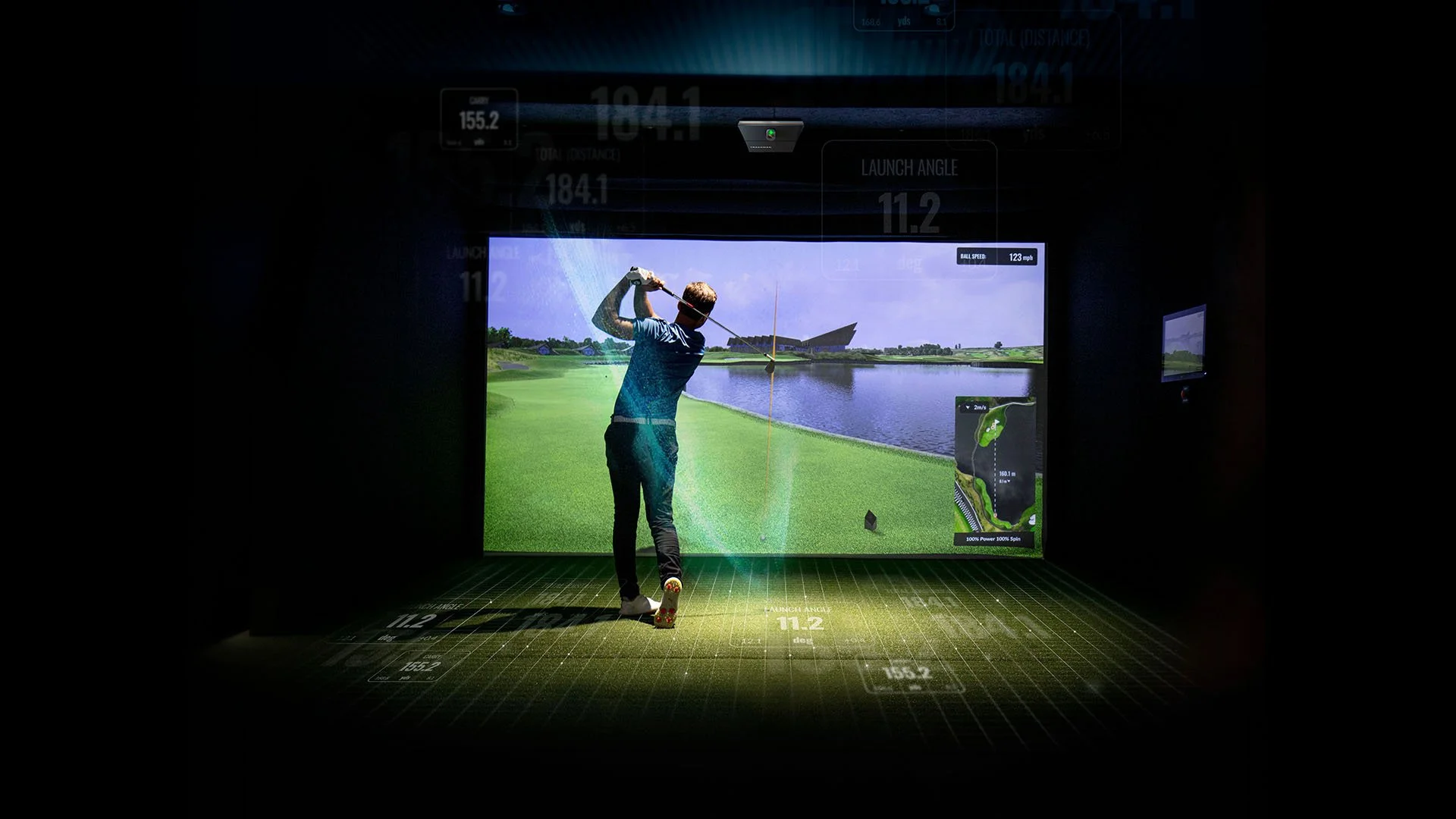
- Ball speed: how quickly the ball leaves the club. It is different from how quickly the club itself was moving.
- Launch angle: the angle at which the ball starts upward. Two shots with similar speed can have different trajectories.
- Spin: the ball's rotation. The amount and orientation of that rotation help explain the flight's shape.
You do not have to study these numbers to have fun. They become useful when you want to understand why one shot behaved differently from another.
Measured data and calculated results are different
A number appearing on screen is not automatically a direct sensor measurement. Some information describes the shot captured at launch; other results describe the flight calculated from it. Carry distance, for example, describes how far a ball travels through the air before landing. In an indoor simulator, the long-distance result comes from the model rather than a ball actually landing on a distant fairway.
This does not make the experience arbitrary. It explains how a short indoor hitting area can support course play and useful practice. It also means simulator results should be understood in the context of the chosen settings and conditions.
What does this change for your visit?
For a golfer, the feedback creates a way to compare shots and explore patterns. For a first-timer, it makes a real swing immediately visible and gives the group something to follow. Both can share the same bay without treating every shot as a lesson.
Think of your first session as a chance to get familiar with the setting. Warm up, ask questions and choose a game or course format that suits the group. One swing is a result; repeated shots give you more context.
Start with three numbers: ball speed, launch angle and spin help explain how a shot behaves.
Try it at Birdies
Standard bays are $60 per hour for up to eight people; VIP bays are $80 per hour for up to 14. Players take turns, and food and drinks are additional. New to the experience? Start with our first-visit guide, or explore golf at Birdies.
Technical sources: Trackman iO product information and Trackman technical specifications. Course imagery supplied through the Trackman Media Kit.