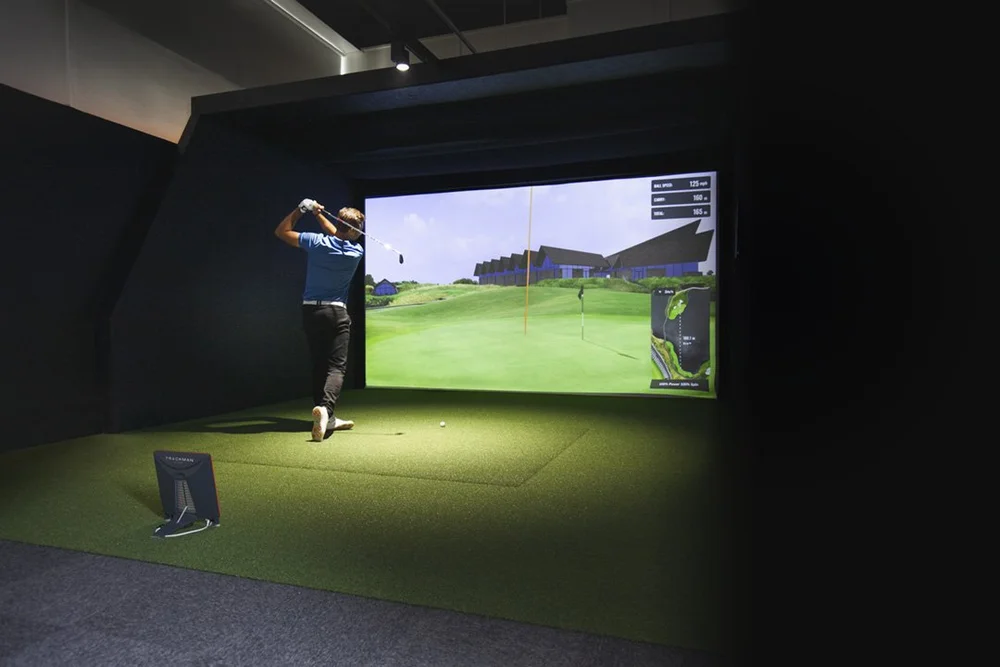
Lead image: Bethpage Black depicted in Trackman Virtual Golf. Courtesy of the authorized Trackman Media Kit. Confirm specific course availability with Birdies.
You know the shot: the iron that comes off perfectly, flies exactly where you pictured it and convinces you that your swing is finally sorted. Then the next ball tells a different story. The Trackman Combine gives both shots a place in the record. That is what makes a structured test useful: it asks what your game can repeat, not what it can occasionally produce.
Sixty shots beat one good story
Trackman describes the Combine as a standardized 60-shot test. The useful number is not a promised handicap improvement or a magic score to chase. It is the size of the exercise: enough shots to move the conversation beyond your best strike and look at a more complete performance.
A test also gives your next practice session a question to answer. Which parts felt comfortable? Where did misses collect? Did accuracy change as the session went on? Treat the result as a starting point for investigation, rather than a diagnosis of your swing.
A yardage map and a skills test answer different questions
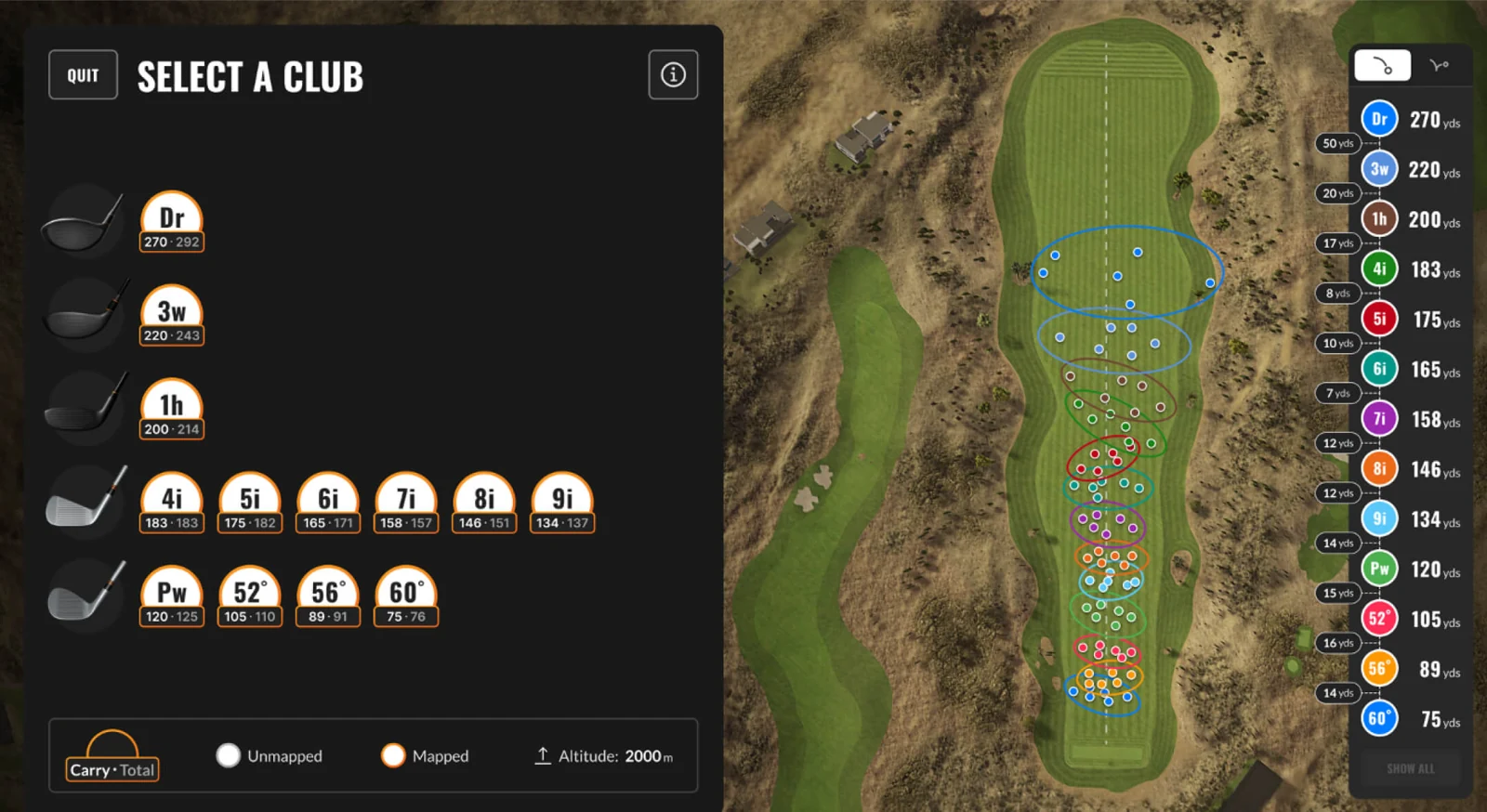
A club-gapping session asks how far each club usually carries and where the gaps sit. The Combine asks a different question: how well can you deliver the required shots within a structured test? Both can be useful, but they are not interchangeable.
- Start with the club-distance guide if you are unsure which club covers which distance.
- Use a standardized test when you want a benchmark you can revisit.
- Use focused practice to work on a specific problem between tests. Repeating the test is measurement; it is not the entire practice plan.
Make the second test comparable to the first
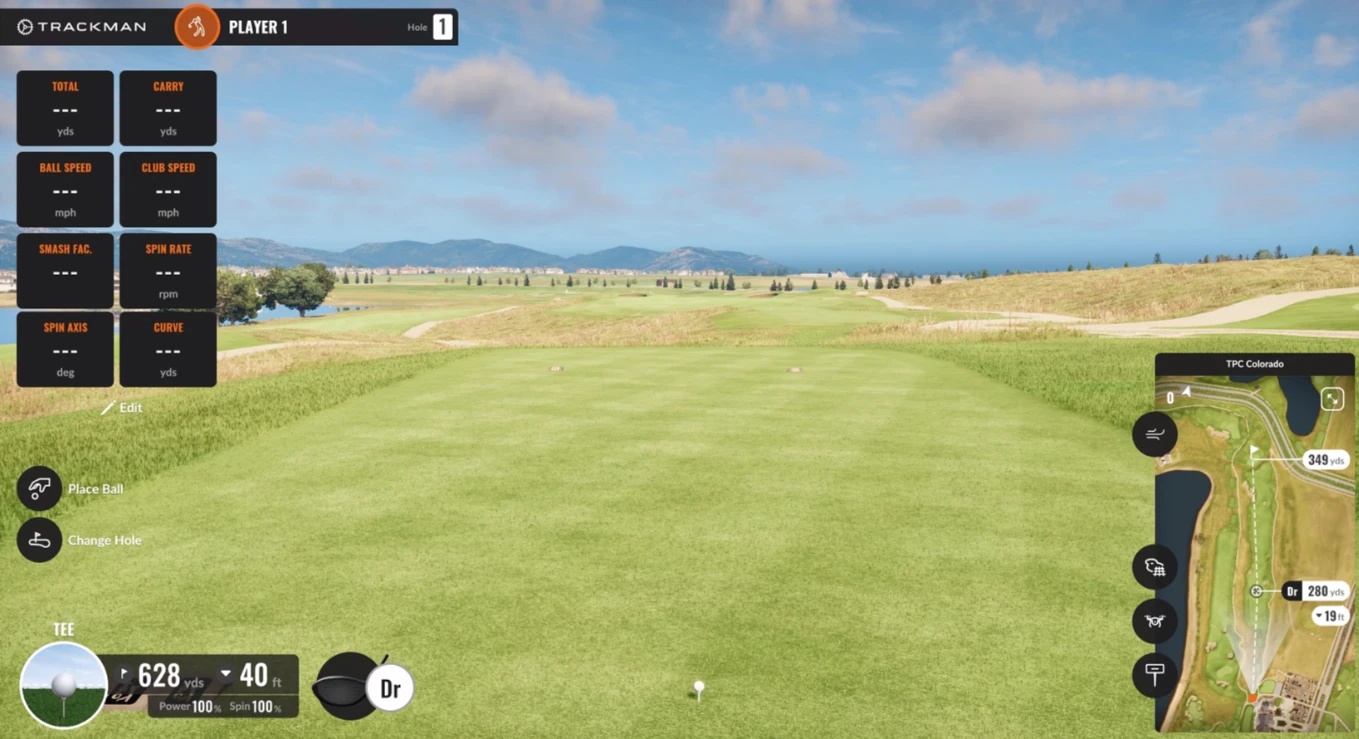
If you change every condition, it becomes harder to interpret the result. Before you start, make a short record of the setup. This is a practical comparison checklist, not an official Trackman requirement:
- Use the same clubs and an approved ball type where practical.
- Record the relevant software settings and virtual conditions. Ask staff before changing a bay configuration.
- Warm up before starting, and note anything unusual, such as fatigue or an interrupted session.
- Save the actual result in the supported account/report workflow. Keep the date and the conditions with it.
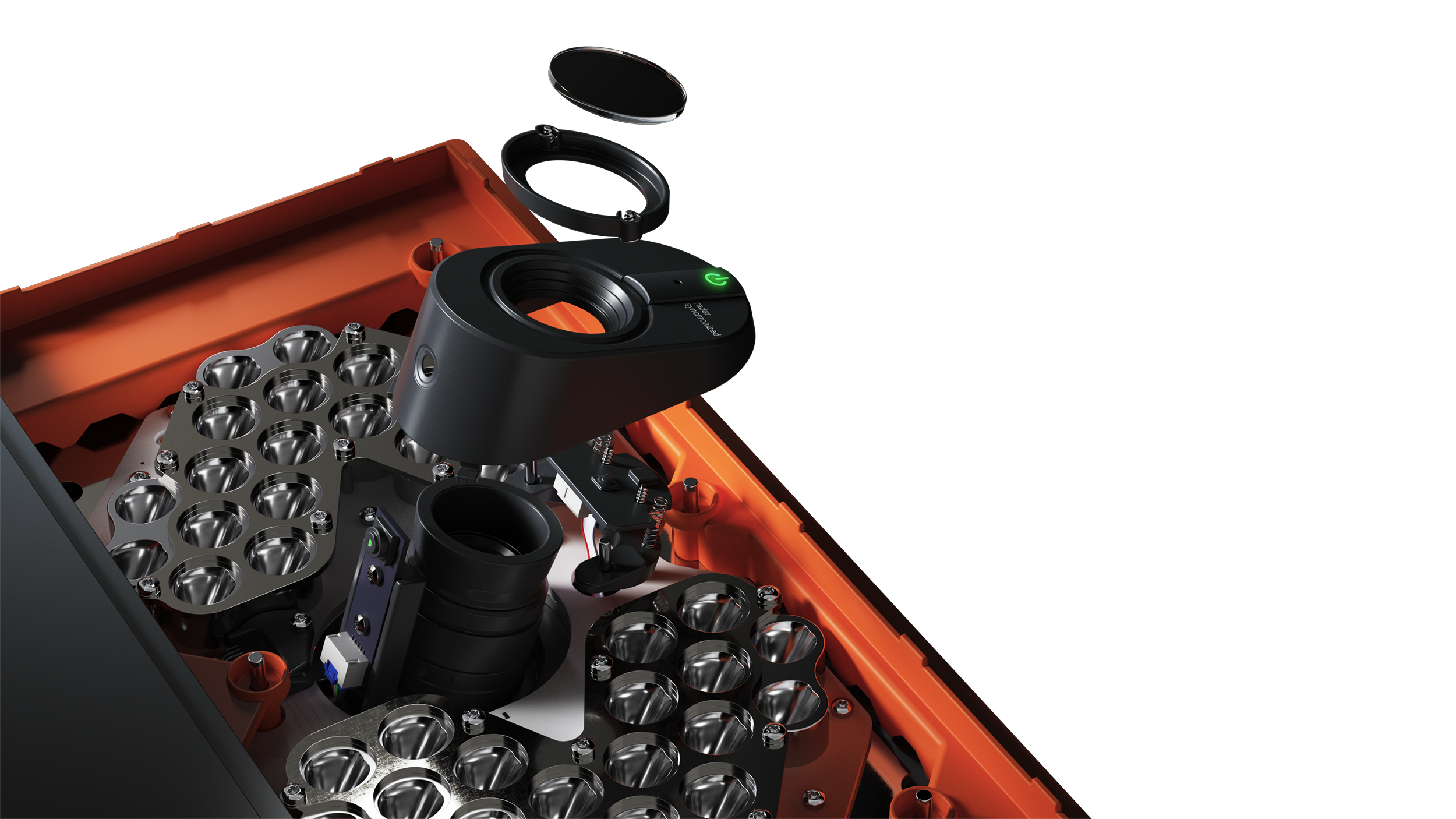
Read the misses before choosing your next drill
A headline result can be a useful reference, but do not stop there. Look for a pattern you can explain in ordinary language: short of the target, finishing to one side, or becoming less consistent during the test. Then choose one question to work on.
For example, “I want to understand why these approaches keep finishing short” is a clearer practice goal than “I need to improve everything.” If the pattern is confusing, a qualified golf instructor can help interpret it. A simulator does not turn one number into a complete coaching assessment.

Plan a practice visit in West Sacramento
Birdies combines five Trackman bays with a restaurant and cocktail bar at 805 Riverfront Street, across from Sutter Health Park. Come to work on your game, or bring people who would rather make it a social round. For a structured test, give yourself time for setup, a warm-up and the test itself; ask the team what session length fits your plan.
Before reserving specifically for the Combine, contact Birdies to confirm the installed mode and any setup requirements. For guidance interpreting the result, arrange coaching separately with a qualified instructor.
Explore the bays and check golf availability · Ask about a Combine session · Read about focused on-course practice
Sources and image credits
Technical reference: Trackman’s guide to Performance Studio, July 6, 2026. Additional terminology: Trackman’s official terminology guide. Course, interface and product imagery: authorized Trackman Media Kit.
TRACKMAN® and the Tracer Logo are registered trademarks of Trackman A/S.