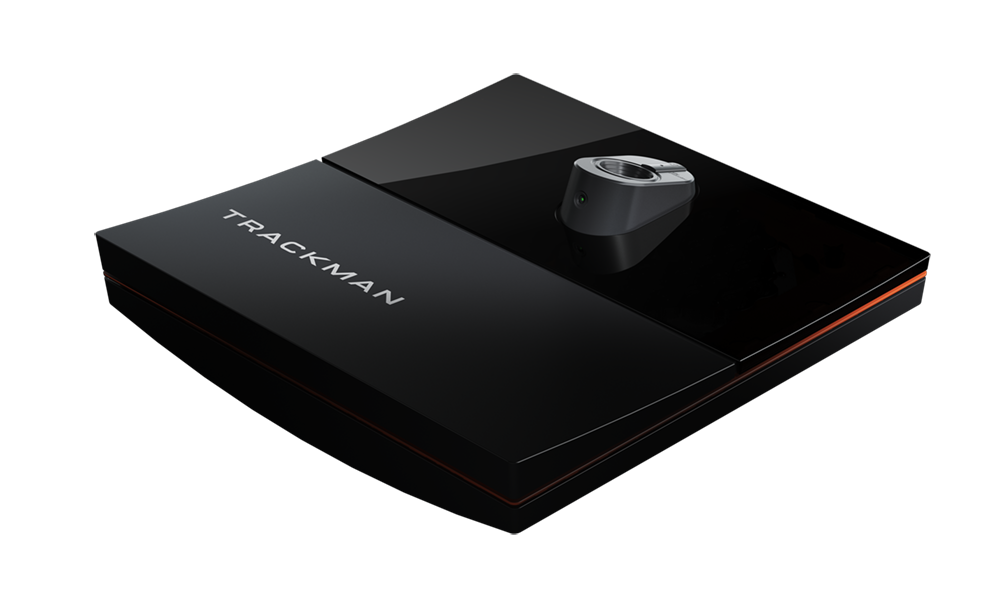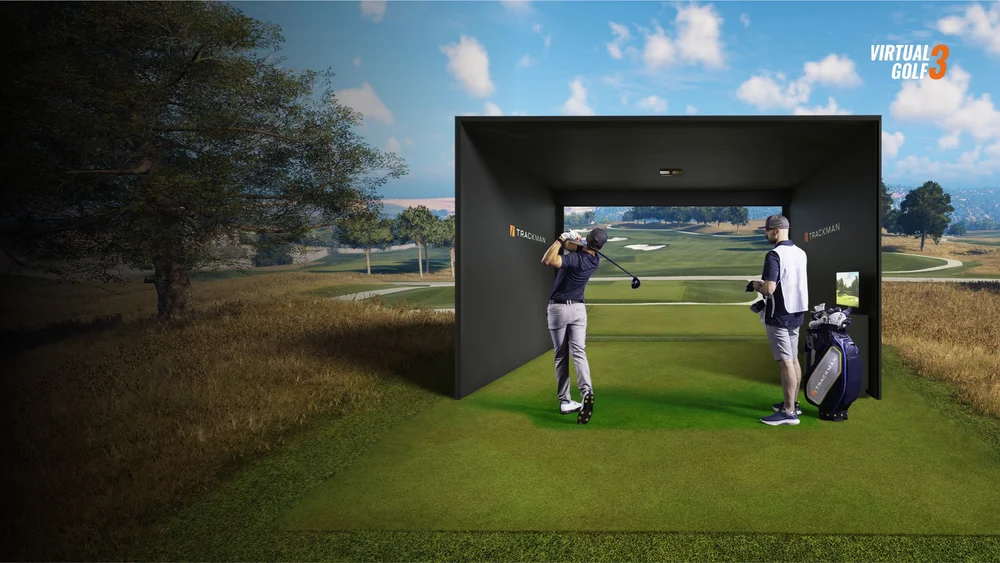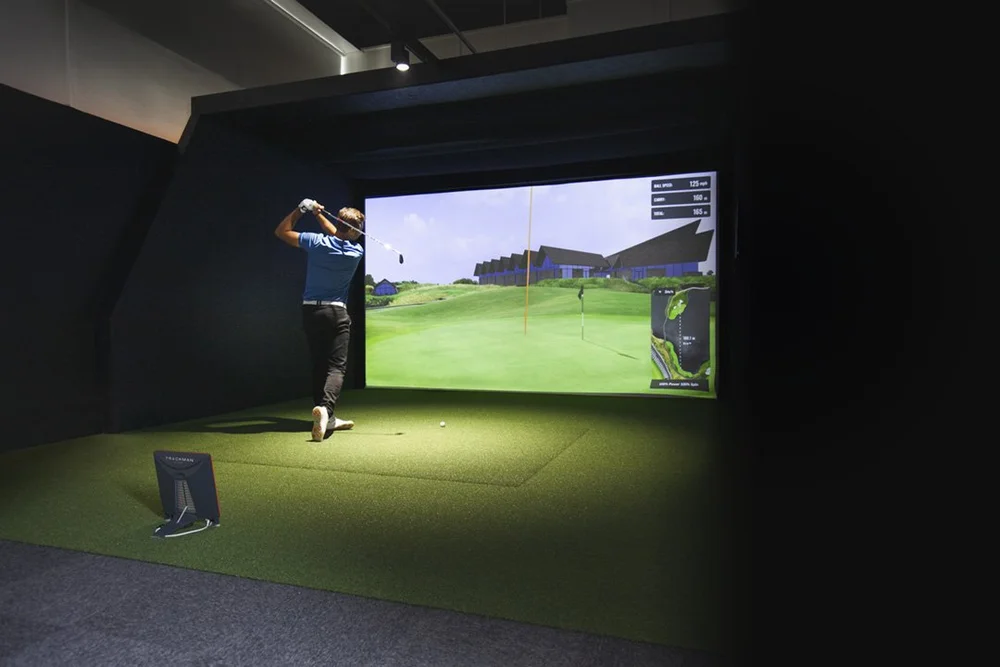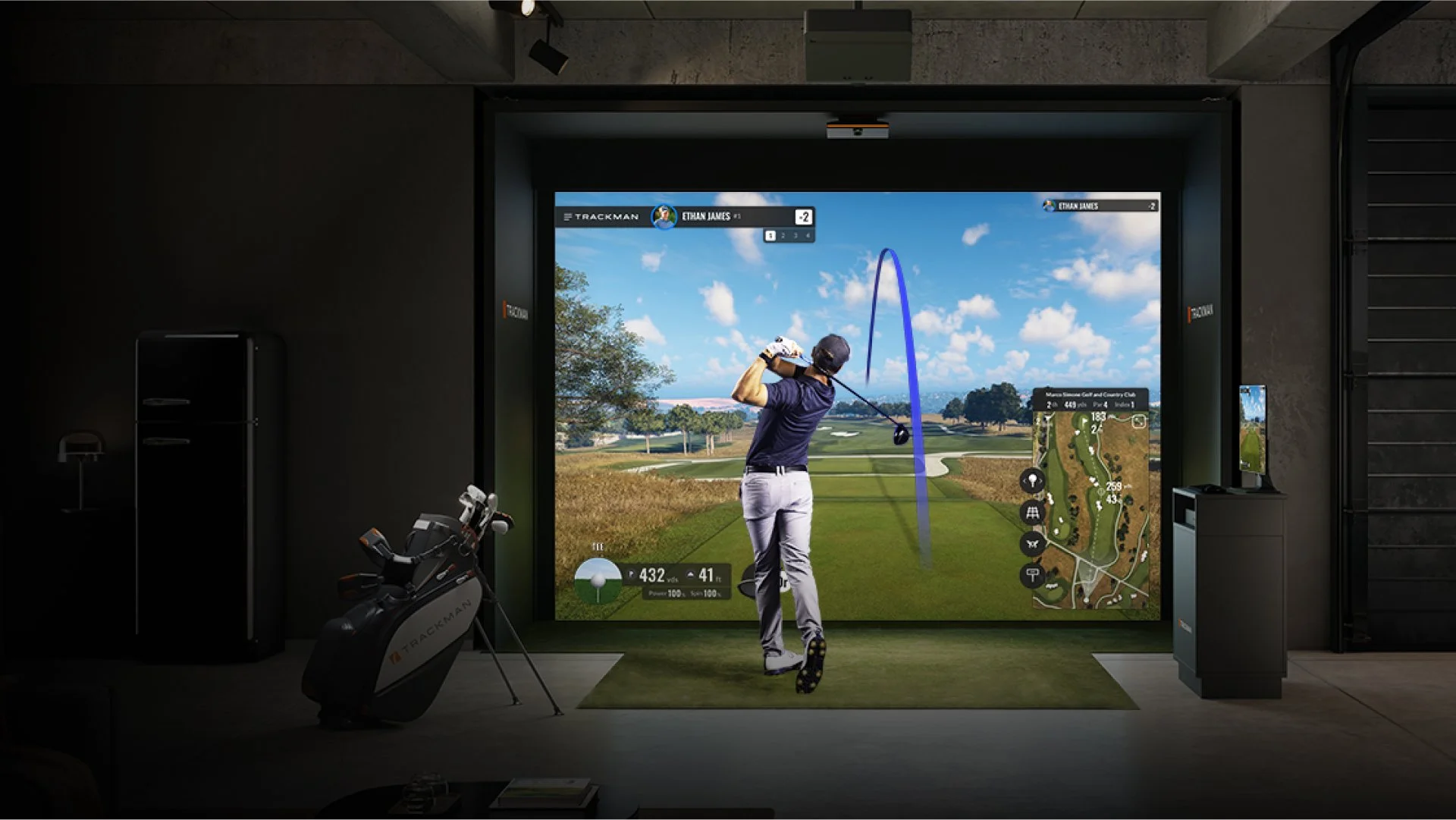
Lead image courtesy of Trackman. Illustrative simulator facility.
You swing the driver twice at the same speed. One ball leaves at 145 mph. The other leaves at 150. Which swing do you try to repeat?
Quick answer
Club speed tells you how fast the clubhead was moving. Ball speed tells you how fast the ball left. Divide ball speed by club speed and you get smash factor, a useful clue about how much speed you got out of the swing.
Same swing speed. Five mph apart.
Illustrative numbers for the same driver. These are examples, not measurements taken at Birdies.
- Shot A: 100 mph club speed, 145 mph ball speed, 1.45 smash factor.
- Shot B: 100 mph club speed, 150 mph ball speed, 1.50 smash factor.
In the second shot, the ball left five miles per hour faster at the same measured club speed. Strike location and the loft delivered at impact can affect that result. The number gives you somewhere to look. To find out where you struck the face, check impact location if available.
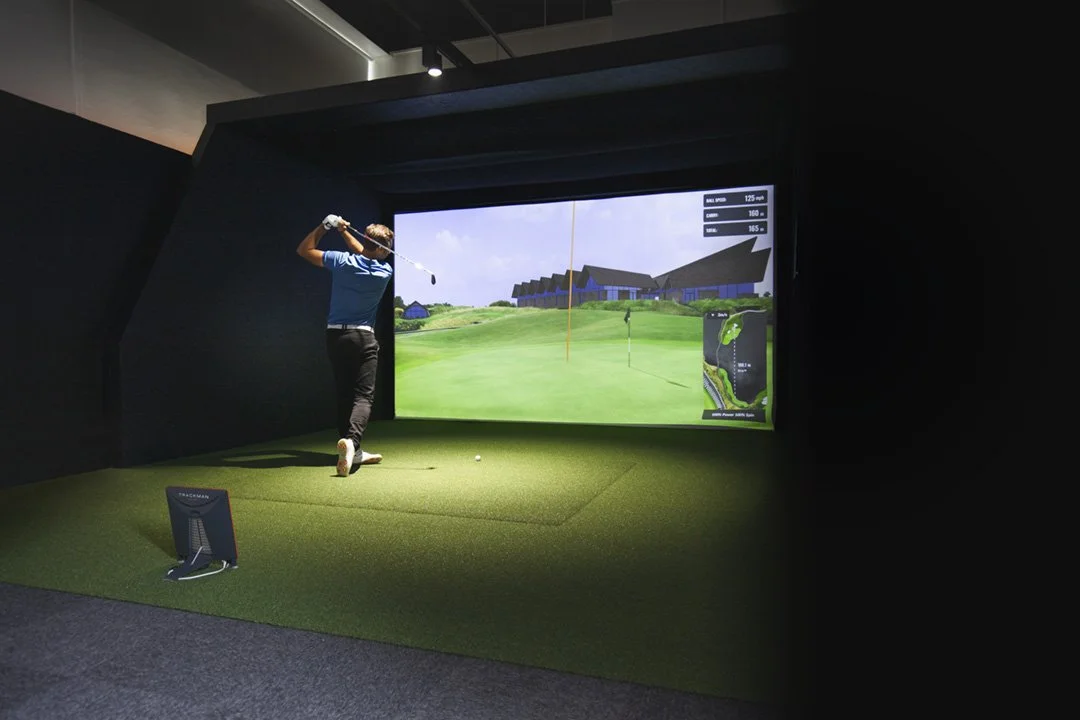
What it means for your next range session
If your ball speed jumps around while club speed stays steady, see if you can tighten the spread before trying to swing faster. Use the same club, ball type and tee height, and keep a couple of ordinary misses in your sample. They’re part of the round you actually play.